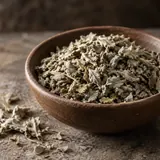
Dried sage is stronger, mustier and more resinous than fresh. Sold whole, rubbed or ground, it is the taste of sage and onion stuffing, pork sausages and long-cooked bean and pork dishes.
Dried or fresh?
Sage dries well, but it changes character more than thyme or oregano do. Dried sage is stronger and mustier, with more of its camphor and bitterness and less of the fresh leaf's soft, slightly lemony sweetness. In a stuffing or a sausage, that stronger note is exactly what people expect.
Fresh sage is essential where the leaf is the point: leaves fried crisp in butter for pasta or gnocchi, saltimbocca, or leaves roasted whole with pork. Dried sage cannot do any of those. See sage for the fresh herb.
In the kitchen
- Sage and onion stuffing. The classic British use, with breadcrumbs, onion and butter; see british-cuisine. American Thanksgiving stuffing and sausage gravy lean on it too.
- Sausages and pork. Lincolnshire sausages and many breakfast sausages are seasoned with dried sage; it also suits pork burgers, meatballs and terrines.
- Beans and pulses. A pinch with white beans, butter beans and pea soup.
- Squash and roots. With butternut squash, parsnips and onions in a slow roast.
- Blends. In poultry seasoning and some versions of italian-seasoning.
Rubbed sage is light and fluffy, so measure it loosely; ground sage packs down densely.
How much to use
About 1 teaspoon of rubbed sage for 1 tablespoon of chopped fresh, about six leaves. Because dried sage is stronger and mustier, many cooks use even less, and the Herb Finder suggests half as much for whole dried leaves. Ground sage is the most concentrated: ½ teaspoon is usually enough where a recipe says 1 teaspoon rubbed. Too much makes a dish bitter and medicinal.
Buying and storing
Whole dried leaves keep best: store them airtight and rub them between your palms when needed. Rubbed sage keeps its character for six months to a year; ground sage fades faster and can turn dusty and harsh. Good dried sage is grey-green and smells strongly when rubbed.
Sage dries well at home: hang bunches somewhere warm and airy until the leaves crumble. See drying-herbs.
Health and safety
Sage contains thujone, which is toxic in large doses, but the amounts in a stuffing or a pot of beans are not a concern. Concentrated sage essential oil and high-dose supplements are another matter; see sage.