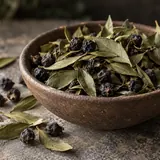
Dried myrtle leaves are resinous and bay-like, with notes of eucalyptus and orange; the dried berries are closer to juniper. Both flavour Sardinian and Corsican meats, stews and charcuterie.
Dried or fresh?
Myrtle is an evergreen shrub with tough, oil-rich leaves, and like bay it dries well. Dried leaves are resinous and aromatic, with a bay-like, slightly eucalyptus and orange-blossom scent; they lose a little of the fresh leaf's brightness. The dried berries are a separate ingredient, closer to juniper, with a resinous, slightly sweet flavour.
Fresh myrtle is needed for the uses where branches perfume a roast directly, like the Sardinian custom of resting spit-roast pork on fresh myrtle, or throwing leafy branches on the embers. Dried myrtle suits stews, rubs and charcuterie. See myrtle for the fresh plant.
In the kitchen
- Stews and braises. Add a few dried leaves, as you would bay, to wild boar, pork or game stews, and lift them out before serving.
- Rubs. Crush about 1 teaspoon of dried berries per 500 g of meat into a rub for game or pork, as you would juniper; see dry-rubs-and-marinades.
- Charcuterie. Dried leaves and berries turn up in Corsican pâtés and cured meats; a few crushed berries suit a home-made terrine.
- Roasts. Tuck dried leaves under a pork or lamb joint as it roasts.
The leaves are tough and are there for aroma, not to be eaten.
How much to use
Use dried leaves roughly one for one with fresh: two or three in a stew serving four. For the berries, about 1 teaspoon, crushed, per 500 g of meat. Both are strong and resinous; too much tastes medicinal, rather like too much bay.
Buying and storing
Dried myrtle is easiest to find in Sardinia and Corsica, or from specialist suppliers. Keep leaves and berries separately in airtight jars away from light, for up to a year.
To dry your own, hang branches in a warm, airy place, then strip the leaves into a jar. See drying-herbs.