
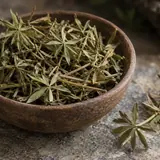
Sweet woodruff has little scent fresh; its hay-and-vanilla aroma of coumarin develops as it wilts and dries. Dried woodruff flavours May wine, teas, syrups and creams, in modest amounts.
Dried or fresh?
Sweet woodruff is unusual: freshly picked, it has almost no scent. Its sweet smell of new-mown hay and vanilla comes from coumarin, which is held in the living plant in a bound, scentless form and released as the leaves wilt and dry. So drying does not take away the flavour; it creates it.
That is why even recipes for "fresh" woodruff, like the German Maibowle, start by wilting the bunch for a few hours. Dried woodruff does the same job and is available all year. See sweet-woodruff for the fresh plant.
In the kitchen
- Maibowle (May wine). Tie a small bunch of dried woodruff and hang it in a jug of dry white wine for 20–30 minutes, then remove it. Add sugar and, if you like, sparkling wine just before serving.
- Tea. A mild, fragrant herbal tea, alone or with other herbs.
- Syrups and cordials. Infuse in a sugar syrup for drinks, or for pouring over strawberries.
- Creams and custards. Infuse briefly in warm cream or milk for ice cream, panna cotta or custard, then strain.
Woodruff pairs well with elderflower and strawberries. Keep infusions brief: the flavour builds quickly and turns bitter.
How much to use
For a litre of wine or cream, a small bunch of dried woodruff (about 3–5 g) infused for 20–30 minutes is enough. For tea, about 1 teaspoon crumbled per cup. Taste as it infuses and take it out sooner rather than later.
Buying and storing
Dried woodruff keeps its fragrance for a year or more in an airtight jar. To dry your own, hang small bundles in a warm, airy, dark place until crisp. The scent develops as it dries.
Throw away any woodruff that goes mouldy while drying (see Health and safety below). See drying-herbs.
Health and safety
Coumarin can harm the liver in sensitive people when eaten in large amounts over time, and high doses cause headaches. Occasional use at traditional quantities is not considered a problem, but keep infusions brief and amounts modest, especially for children. Mouldy woodruff can form dicoumarol, a blood-thinner: never use it. See coumarin-in-cinnamon and sweet-woodruff.