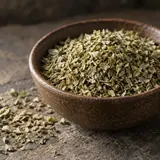
Dried marjoram is sweet, floral and gently piney, milder than oregano. It is the main form sold, and central to German, Austrian and Polish sausages, potato soups and pulse dishes.
Dried or fresh?
Marjoram is one of the few herbs sold more often dried than fresh, and it dries well. Dried marjoram is sweet, floral and slightly piney, with less of the fresh plant's soft, green, almost citrus note. It is milder and rounder than dried oregano, its close relative, and less bitter.
Fresh marjoram is better raw, in salads, scattered over grilled vegetables or fish, or stirred into eggs. For sausages, soups and stews, dried is the traditional choice across central Europe. See marjoram for the fresh herb.
In the kitchen
- Germany and Austria. Dried marjoram is the sausage herb: bratwurst, Leberwurst and other sausages. It also goes in Kartoffelsuppe (potato soup), pea and lentil soups, and with roast goose.
- Poland. In żurek (sour rye soup), pea soup, pierogi fillings and sausage dishes.
- Hungary and the Czech Republic. In goulash and potato dishes, often with caraway.
- Mediterranean. In some herbes-de-provence mixes, and with tomatoes, mushrooms and eggs.
Its aroma is more delicate than oregano's, so add it in the last 15–20 minutes of a long simmer rather than at the start. Rub it between your palms over the pot as it goes in.
How much to use
About 1 teaspoon of dried marjoram for 1 tablespoon of chopped fresh. For a potato or pea soup serving four, 1–2 teaspoons. As a substitute for oregano, use a little more marjoram, as it is milder; going the other way, use less oregano.
Buying and storing
Dried marjoram keeps well for up to a year in an airtight jar away from light; whole or roughly rubbed leaves outlast ground. Good marjoram is green, not brown, and smells sweet and floral when rubbed.
To dry your own, cut stems just before the flower buds open, bunch loosely and hang in a warm, airy place, then rub the leaves off the stems. See drying-herbs.