
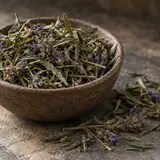
Dried hyssop is a bitter, minty, sage-like herb, sold mostly by herbalists and specialist suppliers. Use it sparingly with fatty meats, pulses and stone fruit, or as a tea.
Dried or fresh?
Hyssop is almost never sold fresh; unless you grow it, dried is the form you will find. It dries well, keeping its bitter, minty, faintly camphor-like character. Like dried sage, it is if anything a little stronger and more bitter than the fresh plant.
Fresh hyssop has uses dried cannot match: the young leaf tips in a green salad, and the blue flowers as a garnish. For cooking with meat, pulses or fruit, dried works well. See hyssop for the fresh herb.
In the kitchen
Use it as you would a strong, bitter sage: in small amounts, with rich food, and usually cooked.
- Fatty meats. A pinch with lamb, pork, duck, goose or game, or in a stuffing, helps cut richness.
- Pulses. A little in lentil or bean soup, the way savory is used.
- Fruit. Its bitter-minty note is good with stone fruit and berries: a pinch in the syrup for poached apricots, peaches or plums.
- Tea. Dried hyssop makes a strong, bitter herbal tea; many people prefer it mixed with mint or sweetened with honey.
Start small, taste and add more only if needed.
How much to use
About ½ teaspoon of dried hyssop where you would use 1 teaspoon of chopped fresh. For 500 g of meat, ¼–½ teaspoon is plenty. It is easy to overdo, and a dish with too much hyssop tastes medicinal and bitter.
Buying and storing
Buy from herbalists or specialist spice suppliers, and keep it airtight away from light for up to a year.
To dry your own, cut the stems just as the flowers begin to open, hang them in small bunches somewhere dry and airy, then strip them into an airtight jar. See drying-herbs.
Health and safety
Hyssop essential oil contains pinocamphone, which can cause convulsions, and should never be taken internally. The dried leaf in normal culinary amounts is not considered hazardous for most people, but people with epilepsy should avoid hyssop, and it is traditionally avoided in pregnancy. See hyssop.