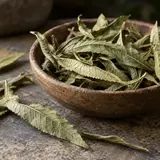
Lemon verbena dries better than almost any other soft-leaved herb, keeping its clean, sherbet-like lemon scent for months. It is sold mainly as a herbal tea, verveine, and suits infusions and baking.
Dried or fresh?
Most soft herbs taste of hay once dried, but lemon verbena is the exception. Its lemon aroma, from citral and related compounds, survives drying unusually well, so dried leaves are a real alternative to fresh, not a poor substitute. Fresh leaves are a little greener and brighter; dried are slightly deeper and more tea-like.
Because fresh lemon verbena is rarely sold, most cooks who do not grow it only ever use it dried. The leaves are tough either way, so in both forms the herb is almost always infused and then strained out, not eaten. See lemon-verbena for the fresh herb.
In the kitchen
- Tea. The main use. In France, verveine is a standard after-dinner tisane. Steep in water just off the boil rather than boiling, which drives off the delicate citrus notes.
- Custards and creams. Infuse a few leaves in warm milk or cream for ice cream, panna cotta, crème brûlée or rice pudding, then strain.
- Scented sugar. Bury a few dried leaves in a jar of caster sugar for a week, and use the sugar for baking and fruit.
- Syrups and poaching. In a sugar syrup for poaching peaches, apricots or plums, or for drinks and cordials.
How much to use
For tea, about 1 teaspoon of crumbled dried leaves per cup, or three to five fresh leaves, steeped for three to five minutes. For infusing a custard or 500 ml of cream, use a small handful of dried leaves (about 1 tablespoon crumbled) and taste as it steeps.
Buying and storing
Keep dried leaves whole in an airtight jar, away from light, and crumble them as needed. They stay fragrant for about a year. Tea shops and herbalists tend to have fresher stock than the supermarket.
Lemon verbena is one of the best herbs for drying at home: strip the leaves and spread them on a rack, or hang whole stems, somewhere warm and airy. See drying-herbs.