
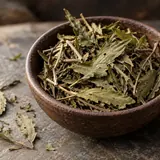
Dried epazote keeps some of the herb's pungent, resinous, petrol-and-mint flavour, more gently than fresh. It is the usual form outside Mexico, and is at its best in a pot of black beans.
Dried or fresh?
Fresh epazote has a strong, resinous, slightly petrol-like smell, with notes of mint, citrus and oregano. Drying softens it considerably. Dried epazote is milder and more herbal, and works well in slow-cooked dishes, but it lacks the punch that fresh leaves give a quesadilla or a bowl of esquites.
Outside Mexico, dried is much easier to find than fresh, and it is the right choice for a pot of beans. See epazote for the fresh herb, and mexican-cuisine for where it fits.
In the kitchen
- Black beans. The classic use. Add about 1 teaspoon of dried epazote to a pot of frijoles de olla for the last 15–20 minutes of cooking. Too early, or too much, and the beans turn bitter.
- Soups. In tortilla soup, bean soups and mushroom soups.
- Sauces. A pinch in simmered sauces and some green moles.
Dried epazote is often sold with a lot of woody stem. Pick out the thicker stems and crumble the leaves, or put the whole lot in a tea strainer or a muslin bag and lift it out before serving.
How much to use
About 1 teaspoon of crumbled dried epazote for a sprig of fresh, which is four to six leaves. That is enough for a pot of beans serving four to six. Epazote is a small-quantity herb in either form: more is not better, and it quickly turns bitter.
Buying and storing
Keep it airtight, away from light, and use it within six months to a year; it fades like any dried herb. Mexican and Latin American grocers are the most reliable source. Epazote grows easily from seed, and self-seeds freely, if you would rather dry your own; see drying-herbs.
Health and safety
Epazote contains ascaridole, which is toxic in large amounts. A teaspoon of dried leaf in a pot of beans is a normal culinary amount, but do not brew strong teas from it or use the seeds or essential oil. It is traditionally avoided in pregnancy and while breastfeeding. See epazote for more.